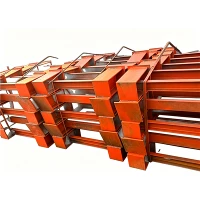

If you’ve ever stood by a railway platform, watched a freight train rumble past, or sat through a delayed commuter ride, you’ve probably never thought about the tiny metal pieces holding those tracks in place. Those are railway embedded parts, and they might seem unglamorous, but they’re make-or-break for rail safety, reliability, and smooth operations. As a supplier that’s worked on these parts for years, I’ve seen first-hand how even a small, overlooked flaw can spiral into big problems—delays, repairs, or worse. That’s why I want to break down the most common failure modes of these parts, why they happen, and what suppliers and rail teams do to catch them before they cause issues.
First, let’s make sure we’re on the same page: railway embedded parts are the metal components welded or anchored into the track bed, bridge structures, or tunnel walls to hold rails, signal equipment, and even overhead power lines steady. Think tie plates, anchor bolts, sleeve anchors, and the brackets that secure tracks to concrete. Without them, rails shift, trains derail, and the whole line goes down. If you’re sourcing parts for a project, you can check out our work at Railway Embedded Parts for examples of parts built to withstand heavy loads and harsh environments.
One of the most frequent failure modes I see is corrosion, and it’s not just “rust”—it’s a slow, destructive process that creeps into every part of the embedded part. Rail lines run everywhere: coastal areas with salt air, snowy regions that use brine to melt ice, industrial zones with chemical runoff. Those environments eat away at even the sturdiest steel. The problem starts when the protective coating (like zinc plating or powder coat) gets chipped or scratched during installation or transport, leaving bare steel exposed. Water, salt, and oxygen get in, and corrosion spreads. For anchor bolts embedded in concrete, concrete itself can be part of the issue: concrete has a high pH, but over time, moisture seeps in and makes it more acidic, which accelerates rust. Once corrosion sets in, the cross-section of the bolt or anchor gets thinner, so it can’t hold the required load. I’ve seen this on lines that run along the coast—bolts that should hold 10,000 lbs can drop to 6,000 lbs after just 5 years because of hidden corrosion under the concrete. It’s not always obvious until a maintenance check pulls the part out, so we test our parts for corrosion resistance during manufacturing to help prevent this.
Next up is fatigue failure, which is super common for parts that get repeated, cyclical loads from trains. Every time a train passes, the rail vibrates, pulls, and pushes on the embedded parts—sometimes millions of times a year. Over time, that constant stress causes tiny cracks to form, usually at points where the metal changes shape, like welds, bolt threads, or the base of an anchor. It’s called fatigue because it’s not a one-time overload; it’s slow wear. For example, a tie plate that sits under a rail gets squished with every train wheel. That repeated compression weakens the metal until a crack forms, and after enough cycles, the plate breaks, letting the rail shift. We used to see a lot of this on high-traffic lines, but now we adjust the metal’s strength and smooth out those shape changes during manufacturing to reduce stress points. It’s a small tweak, but it makes a huge difference in how long the parts last.


Then there’s poor installation, which is maybe the most avoidable failure mode, but one that still happens way too often. Even if a part is perfectly built in the factory, if it’s installed wrong, it will fail. I’ve seen engineers skip drilling the right size hole for an anchor bolt, or install a tie plate with gaps under it so it doesn’t distribute the rail’s load evenly. Or even worse, use the wrong type of embedded part for the environment—like a part without enough rust protection for a coastal line. Installation mistakes also include not securing the part deep enough in the concrete or track bed, so it pulls loose when a train hits it hard. That’s why we always work with our clients to share install guides and do follow-up checks, because a good part doesn’t do any good if it’s put in wrong. If you’re looking for parts that pair well with proper installation (and are built to hold up when installed right), our Construction Machinery Welded Components and Building Welded Parts have similar manufacturing standards we use for railway parts, so you know the quality is consistent.
Another failure mode is overloading, which might seem obvious, but it’s not just about putting a heavier train on the tracks than usual—sometimes it’s about unexpected stress. For example, freight trains carrying oversized loads can put more side pressure on track anchors, or a snow plow hitting a track too hard can bend a tie plate. Or even just normal wear on a line that’s supposed to carry commuter trains but starts handling more freight than it was designed for. The embedded parts aren’t built for extra stress, so they bend, crack, or break. We talk to our clients about load requirements upfront, making sure we size every part to handle the specific traffic their line gets. If a line is going to start carrying heavier trains, we’ll adjust the part’s thickness or material to match. That’s why communication is key—we’re not just a supplier, we want our parts to work for you long-term, so we ask all the right questions before we build anything.
Thermal stress is a less talked-about failure mode, but it’s a big one in regions with extreme temperature swings. Steel expands when it’s hot and contracts when it’s cold, and that movement pulls on the embedded parts. For example, in the winter, steel rails shrink, pulling on the anchor bolts that hold them, which can make the bolts loosen or crack. In the summer, rails expand, pushing against the brackets, which can bend the metal. If the embedded part is too rigid (no flexibility to move with the rail), the stress builds up until it fails. We’ve started adding small gaps or slightly flexible connections to some parts for clients in areas with big temperature changes, so the metal can move without breaking. It’s a simple adjustment, but it solves a problem that’s caused a lot of track shifts in places like the northern US or parts of Canada.
There’s also the issue of material defects, which are rare but can be catastrophic. Sometimes a batch of steel has impurities (like too much carbon or not enough tensile strength) that make it weaker than it should be. Or a weld that’s done wrong—with gaps, incomplete fusion, or too much heat that makes the metal brittle. I’ve seen a bolt snap during a load test because of a hidden flaw in the steel, and it’s a reminder that even small material issues can blow up. That’s why we do multiple quality checks at every step of manufacturing: test the steel, inspect every weld, and run load tests on finished parts. It’s extra work, but it keeps our clients from dealing with failures out on the track. If you’re sourcing parts from any supplier, make sure they do these checks—cutting corners on quality will cost you way more in repairs and delays later.
Now, I know some of you might be thinking, “Why does this matter to me?” If you’re a rail operator, a maintenance manager, or even someone planning a new railway project, understanding these failure modes helps you avoid costly issues. If you’re a supplier, it means building parts that are tough enough to stand up to real-world conditions, not just lab tests. For me, the best part of this job is knowing that the parts we make help keep trains on track, passengers safe, and lines running on time.
If you’re in the market for reliable, built-to-last railway embedded parts, or have questions about your current components, feel free to reach out to our team to discuss your specific needs. We’re here to help you find the right parts for your railway, whether you’re working on a new line, upgrading an old one, or doing routine maintenance. And if you’re working on other projects that need strong, durable welded components—like agricultural equipment or construction projects—check out our Agricultural Chassis Welding, Agricultural Bracket Welding, and Building Welded Parts for more of our work. We’re always happy to share what we’ve learned over the years, no matter what kind of project you’re tackling.
References
- Federal Railroad Administration (FRA). (2021). Rail Track Maintenance and Safety Standards for Embedded Components. U.S. Department of Transportation.
- American Railway Engineering and Maintenance-of-Way Association (AREMA). (2022). Manual for Railway Engineering: Chapter 5 – Track Structures. AREMA Press.
- International Organization for Standardization (ISO). (2020). ISO 1461: Hot-Dip Galvanized Coatings on Fabricated Metal Products – Specification and Test Methods. ISO.
- Railway Technical Research Institute (RTRI). (2020). Fatigue Failure Analysis of Track Embedded Parts Under Cyclic Loads. RTRI Journal.
- Corrosion Protection in Transportation Infrastructure. (2019). Journal of Rail Engineering.